
Looking for local farm drainage services in Wisconsin? See how expert tile drainage boosts yields, protects soils, and meets WI rules—plus who to call.
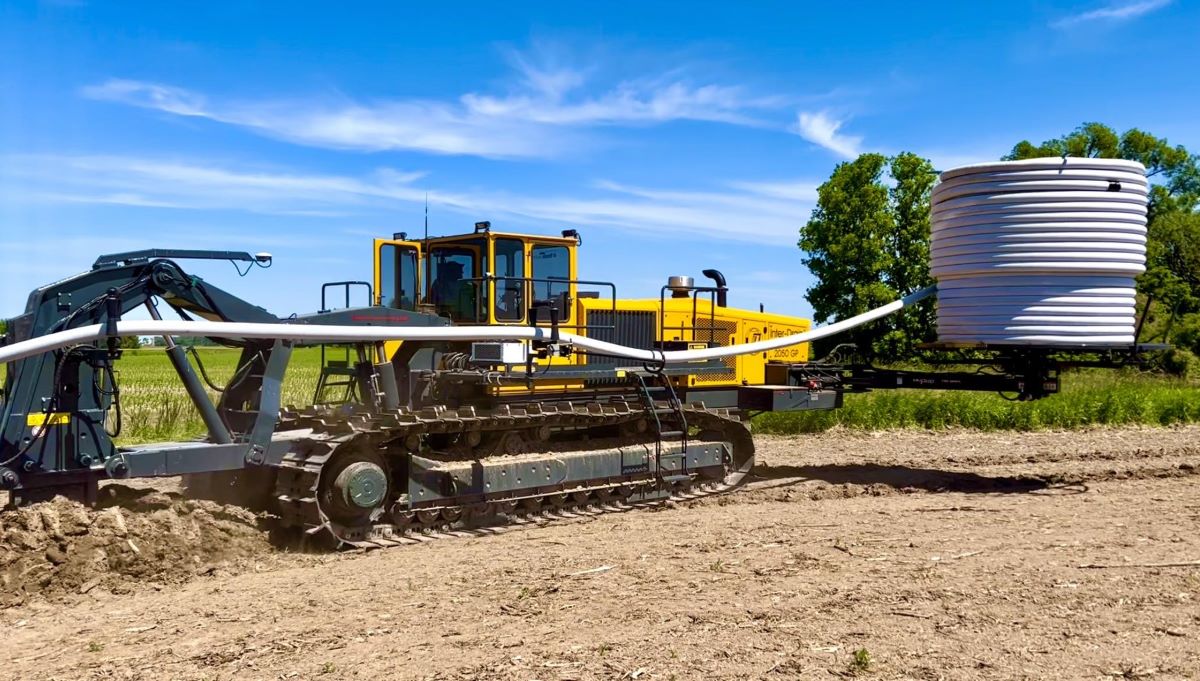
Wisconsin’s mixed soils and frequent spring wet spells can leave fields waterlogged just when you need to plant or spray. Subsurface tile drainage lowers the water table, keeps oxygen in the root zone, and helps fields dry and warm faster—often translating to better stand establishment, timely fieldwork, and more reliable yields. University Extension research in the Upper Midwest consistently points to these agronomic benefits on poorly drained soils.
If you’re searching for local farm drainage services in Wisconsin, this guide explains how tile drainage works, the benefits and trade-offs, what a high-quality installation process looks like, and how a Wisconsin contractor like JK Trenching serves growers across the state.
What is farm tile drainage?
Farm tile drainage is a network of perforated polyethylene pipes (historically clay “tiles,” hence the name) installed below ground, typically 3–4 feet deep, to lower the water table and move excess water to a stable outlet. Layouts can be:
- Pattern drainage for whole-field coverage,
- Targeted “random” drainage to fix persistent wet spots, and
- Surface inlets for shallow depressions that pond after heavy rains.
Well-planned layouts from local farm drainage services in Wisconsin balance cost, outlet capacity, and long-term performance.
By keeping the root zone aerated and trafficable, subsurface drainage improves emergence, reduces compaction risk, and allows for earlier, more consistent field operations.
Why choose a local Wisconsin drainage specialist?
Drainage isn’t one-size-fits-all. Wisconsin fields vary from glacial tills to lake-plain clays and Central Sands—each with unique hydrology, outlets, and regulatory considerations. The right partner matters, and local farm drainage services in Wisconsin understand these county-by-county nuances:
- Soils and slopes that dictate lateral depth and spacing.
- High-flow periods (snowmelt, spring storms) that stress outlets.
- State rules on wetlands and surface waters (more on compliance below).
- County/NRCS coordination and practical design choices for your farm.
For hands-on support, local farm drainage services in Wisconsin can evaluate soils, grades, and outlets on site. JK Trenching focuses specifically on agricultural drainage—drain tile installation and repair services throughout most of Wisconsin—making them a practical first call if your fields are in the Fox Valley, Green Bay area, or central/eastern counties.
On their site you’ll also find dedicated service pages for farm drainage in Freedom, WI, and references to serving Shawano and Winnebago areas—useful signals that they work across a broad footprint of northeast Wisconsin.
The agronomic benefits you can expect
1) More reliable yields on wet-natured soils
With local farm drainage services in Wisconsin, drained soils breathe better and stands establish on time. That supports earlier planting, healthier root systems, and less water stress after heavy rains—reasons drained soils rank among the world’s most productive in research literature.
2) Better field access and lower compaction risk
With less standing water and quicker soil drying, you can till, plant, or side-dress on schedule, rather than waiting for ruts to firm up. Timely traffic reduces the chance of “smeared” seedbeds and sidewall compaction.
3) Lower surface runoff and soil loss
Long-term edge-of-field monitoring in Wisconsin and Minnesota shows tile systems tend to reduce surface runoff events and soil loss compared to undrained fields—because soils spend less time at saturation when tiles are flowing. (Tile flows are more frequent but smaller, while surface runoff events are fewer and flashier.)
4) Cleaner harvests and fewer drown-out spots
Strategic laterals under low pockets minimize drown-outs and the mud that wrecks harvest efficiency.
Many farms report cleaner harvest windows after adopting local farm drainage services in Wisconsin.
Bottom line: if your fields stay wet for days after big rains, a well-designed local system can transform plantability, stand uniformity, and time management across the season.
Environmental considerations (and how to manage them responsibly)
Tile drainage changes how water leaves your field: less overland flow, more subsurface flow. That shift reduces erosion and phosphorus losses tied to sediment, but it can increase nitrate movement through tiles if nutrients are poorly timed or soils are cracked/dry before a rain. Smart management keeps risks in check:
- Time nutrient applications away from periods when tiles are flowing hard (e.g., early spring thaws).
- Maintain outlets and fix blowouts so surface water and sediment don’t shortcut straight into tiles.
- Use cover crops and manage soil test phosphorus to limit dissolved P risks.
- Consider edge-of-field treatments (denitrifying bioreactors, saturated buffers, controlled drainage) if nitrate loss is a concern downstream.
The takeaway from UW–Madison Discovery Farms: drainage can lower surface erosion but requires thoughtful nutrient and water management to protect water quality.
Wisconsin rules and permitting: what farmers should know
In Wisconsin, whether your drainage project needs DNR approval depends largely on wetland status and whether the work will discharge fill:
- Projects outside wetlands: Installing or repairing tile outside mapped wetlands typically does not require DNR approvals, especially when using non-fill methods like vibratory plowing/knifing. Still, wetland maps can be imperfect—contact DNR to confirm your site before you start.
- Repairs/replacements: Replacing or repairing existing tile in the same footprint and grade generally does not need DNR approval.
- New tile in wetlands: DNR approval is required if the project discharges fill in previously untiled wetlands (e.g., excavation/fill for new mains, connections, lifts, or pumps).
Practical tip: Have your contractor coordinate early with DNR and, where applicable, NRCS for wetland determinations and standards. Local specialists work with these agencies routinely and can help you avoid costly missteps.
What great local farm drainage service looks like (step-by-step)
Here’s a typical process you can expect when you hire a Wisconsin specialist like JK Trenching:
- Field walk & soil review
- Identify wet patterns, outlets, and known problem spots.
- Review soils and slopes to guide depth/spacing decisions. (Soil texture and Ksat inform spacing; a test pit or Web Soil Survey helps.)
- Concept and layout
- Choose pattern vs. targeted laterals; plan main sizes and grades; locate outlets; decide on any surface inlets for depressions.
- Compliance check
- Confirm wetland status, select installation methods that avoid fill where possible, and document outlets and erosion control.
- Installation
- Use a drainage plow or trencher to place laterals at the designed depth and grade.
- Install rodent-guarded outlets and stabilize discharge points.
- Commissioning & QA
- Verify outlet flows, fix any blowouts or sinkholes, and photograph outlets and key junctions for farm records.
- Maintenance plan
- Inspect outlets annually at peak flows (spring melt, after big rains), clear debris behind rodent guards, monitor for erosion, and watch for wet streaks that may indicate a blockage.
Why Wisconsin growers work with JK Trenching
- Agricultural focus: JK Trenching specializes in farm drainage—drain tile installation and repair—so they live and breathe the details that matter to row-crop and forage operations.
- Local coverage: Service pages highlight work in Freedom, Shawano, and Winnebago areas, indicating a strong presence across northeast Wisconsin and beyond.
- Easy to reach: You can contact them directly at +1 (920) 766-7431 or keith@jktrenching.com to discuss your field and request a quote.
Pro tip: when you call, have your acres, soils (if known), outlet options, and problem areas ready. Photos and a simple map shorten the scoping process.
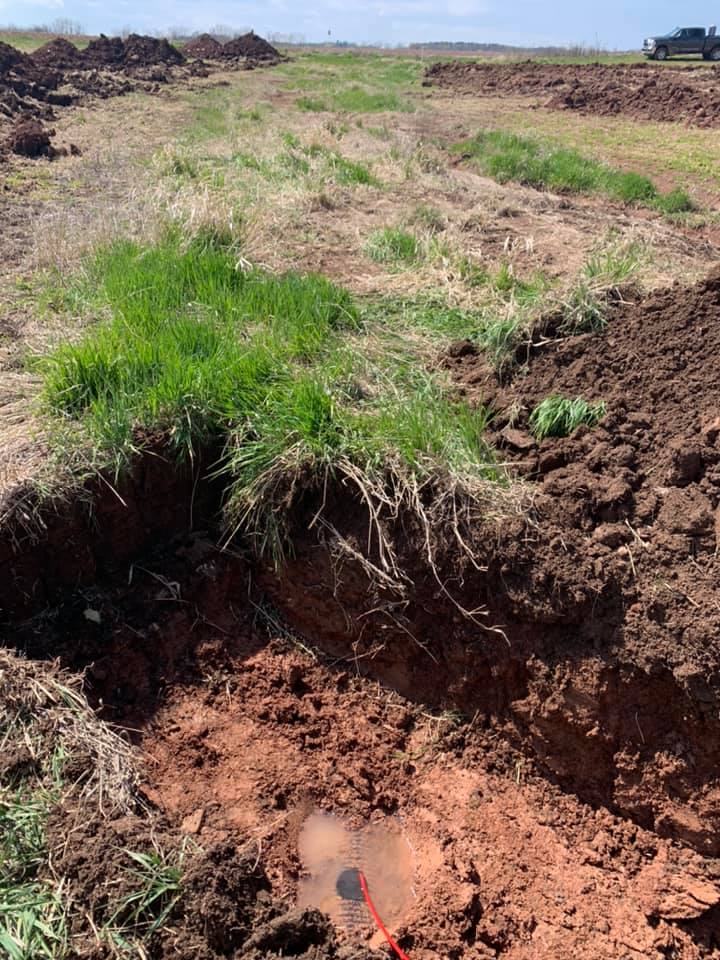
Cost factors (what actually drives your price)
No two fields price the same. Your estimate will reflect:
- Design scope: pattern vs. spot-fixing; total lateral length; main sizes.
- Depth and spacing: tighter spacing or deeper laterals for heavy soils add footage and time.
- Outlets: length to outlets, easements, and any stabilization.
- Install method & access: plow vs. trench, tree lines, rock, or soft ground.
- Compliance steps: wetland delineation or permitting if required.
A reputable contractor will itemize footage and key assumptions so you can compare options (e.g., 40-ft vs. 60-ft spacing scenarios).
Design choices that pay back
- Right spacing for your soil: Heavier clays often need tighter spacing to keep the water table down during wet windows; sands can be wider.
- Protect outlets: Rodent guards and riprap or grassed outlets prevent plugging and erosion. Inspect each spring melt.
- Targeted inlets: Use inlets sparingly for chronic depressions; keep them screened and buffered.
- Edge-of-field treatments: If nitrate is a downstream concern, bioreactors, saturated buffers, or controlled drainage can mitigate losses.
How drainage interacts with nutrient management
Because tiles move water (and soluble nitrate) through the profile, nutrient timing is critical:
- Avoid manure/fertilizer when tiles are running hard or when soils are cracked/dry (quick pathways to tiles).
- Use the 4R framework—right source, rate, time, and placement.
- Consider cover crops to scavenge residual nitrogen and protect soil.
When managed well, drainage and nutrient plans work together: you keep soils healthy, and your applied N and P stay where crops can use them.
Frequently asked questions (Wisconsin-specific)
Do I need DNR approval for my project?
If you’re outside wetlands and installing tile using non-fill techniques (e.g., vibratory plow), DNR approval is typically not required. New tile projects in wetlands that involve discharge of fill (e.g., excavation/backfill for new mains or pumps) do require approval. Always verify wetland status and contact DNR early.
Will tile drainage increase erosion?
Tile drainage usually reduces surface runoff and soil loss compared to undrained conditions by keeping soils below saturation. However, nutrient management remains crucial because nitrate can move with tile flow.
How often should I inspect my outlets?
At least once a year during peak flows (spring melt or after big rains). Check for debris, rodent activity, breaks, or blowouts and repair promptly.
How deep and how far apart are laterals?
It depends on soil type, hydraulic conductivity, and crop goals. Typical Midwest installs target ~3–4 ft depth, with spacing adjusted to soil (tighter in heavy clays). Your contractor will size mains and spacing from soil data and outlets.
Can I add tile to only the wettest 10–20 acres?
Yes—targeted drainage is common and cost-effective for chronic wet pockets. Your contractor can extend laterals later if you choose.
Who provides local service in northeast Wisconsin?
JK Trenching offers farm drain tile installation and repair across much of Wisconsin, with service presence around Freedom, Shawano, and Winnebago counties.
A simple checklist before you call
- Field map marking wet areas for local farm drainage services in Wisconsin to review.
- Notes on soil types/texture if known (or ask for a test pit)
- Photos after big rain events
- Any tile records or old maps
- Your nutrient program and timing windows (to coordinate with drainage goals)
Conclusion
Across wet springs and tight planting windows, local farm drainage services in Wisconsin turn ‘mud weeks’ into timely fieldwork, protect the root zone, and smooth out yield variability across seasons. Pair a thoughtful design with good nutrient timing and regular outlet maintenance, and you’ll maximize agronomic wins while minimizing water-quality risks. When you’re ready, a local contractor like JK Trenching can help you design, install, and maintain a system that fits your soils, your crops, and Wisconsin’s rules.
Work with a Wisconsin pro
If you’re ready to improve crop stands, reduce field delay, and fix the messy wet spots for good, it’s time to talk to a local specialist.
- JK Trenching – Farm Drainage Specialists
Phone: +1 (920) 766-7431
Email: keith@jktrenching.com
They handle farm drain tile installation and repairs across much of Wisconsin and can advise on layout, outlets, and pragmatic compliance steps for your site.