
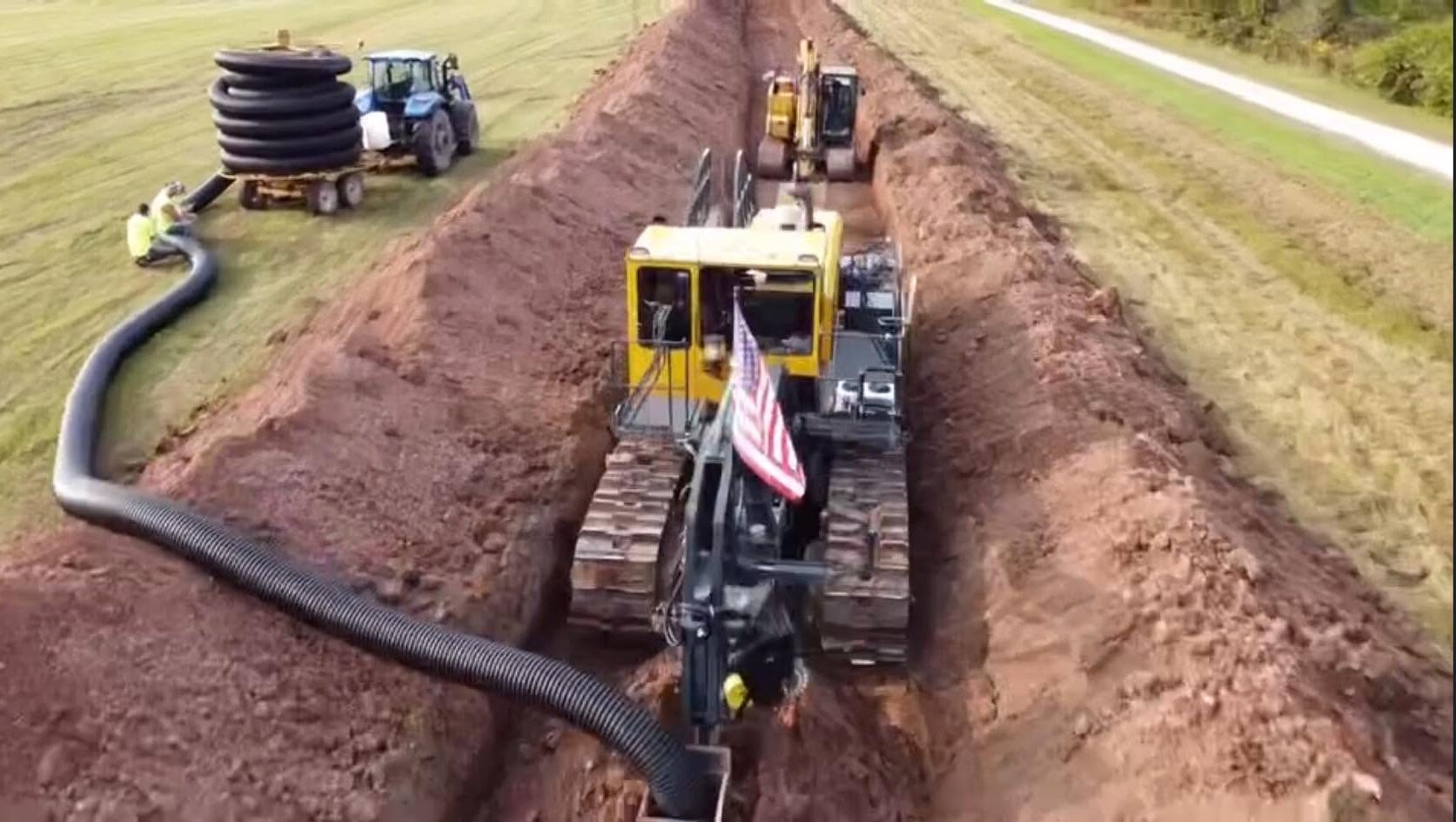
Managing excess water is a common challenge for Wisconsin farmers. Fields that remain saturated after heavy rain or spring snowmelt can delay planting, restrict equipment access, increase soil compaction, and create poor growing conditions for crops.
A properly designed drainage system can help move excess water away from the root zone and improve field conditions. However, successful farm drain tile installation in Wisconsin depends on much more than simply placing perforated pipe underground. Tile depth, spacing, soil type, field topography, grade, and outlet location all affect how well a drainage system performs.
So, how deep should drain tile actually be installed? There is a typical range, but the correct answer depends on the conditions of each farm.
What Is the Ideal Drain Tile Depth for Wisconsin Farms?
Modern agricultural drain tile in Wisconsin is typically installed about 3 to 6 feet below the soil surface, according to University of Wisconsin agricultural drainage guidance.
That does not mean every tile line should automatically be buried at the same depth.
The appropriate farm drain tile depth depends on factors such as the soil profile, field elevation, drainage outlet, tile spacing, slope, and the specific water-management problem being addressed.
A field with relatively flat terrain and restrictive soil may require a different drainage design than farmland with rolling topography, depressions, springs, or sidehill seepage.
Why There Is No Universal Drain Tile Depth
Drainage systems must work with the natural characteristics of the land.
Wisconsin’s agricultural landscape varies considerably. In many parts of eastern Wisconsin, medium-textured surface soils sit above finer glacial material. Water may move relatively easily through the upper soil layer but encounter more restrictive material underneath, contributing to seasonal saturation.
That is one reason experienced drainage contractors evaluate the entire field instead of relying on a single standard measurement.
What Factors Determine Farm Drain Tile Depth?
Several conditions influence how deep a tile drainage system should be placed.
Soil Type and Water Movement
Soil affects how quickly water moves toward a drainage line.
Heavy or poorly drained soils behave differently from more permeable soils. In areas where subsurface layers restrict downward water movement, excess moisture may remain near the crop root zone after significant rainfall.
The drainage design must account for how water moves through that particular soil profile.
For Wisconsin farmers dealing with wet fields or a seasonally high water table, understanding the soil is therefore an important part of drainage planning.
Field Topography and Slope
Drain tile depends on proper grade to move water toward an outlet.
Wisconsin farmland is not uniformly flat. Some properties contain depressions, rolling ground, hillsides, low areas, or locations where water naturally collects. UW guidance notes that Wisconsin tile systems often follow depressional areas rather than the uniform grid patterns commonly found in flatter agricultural regions.
A site survey can help identify these elevation changes before installation begins.
Drainage Outlet Elevation
The drainage outlet is another major consideration.
For a gravity drainage system to work correctly, water must have somewhere to go. An outlet that is too high relative to the field can limit how a system is designed and how deep certain lines can reasonably be installed.
UW Extension describes an unobstructed, properly installed outlet as an essential part of a functioning tile drainage system.
Where gravity drainage is not practical, other drainage solutions, including lift-pump systems, may need to be evaluated.
Does Drain Tile Depth Affect Tile Spacing?
Yes. Drain tile depth and spacing are related, but they should not be considered separately from soil conditions.
Drainage laterals are the lines that collect excess water from the soil and carry it toward larger sub-mains or main lines.
How closely these laterals need to be installed depends partly on how quickly water can move through the surrounding soil. Some soils may require closer spacing to achieve the desired drainage performance.
That is why simply copying the depth and spacing used on another Wisconsin farm can produce disappointing results. Agricultural tile drainage should be designed according to the field being drained.
Can Farm Drain Tile Be Installed Too Deep or Too Shallow?
Yes. More depth does not automatically mean better drainage.
What Happens When Tile Is Too Shallow?
Tile installed too close to the surface may not adequately manage the water table under certain field conditions. Shallow placement can also make the drainage system more vulnerable to interference from future fieldwork, depending on the location and system design.
What Happens When Tile Is Too Deep?
Installing tile unnecessarily deep can increase project complexity and may create problems related to grade or outlet elevation.
The goal should not be to bury drain tile as deeply as possible. The goal is to establish the appropriate depth and slope so water can move efficiently through the system while addressing the field’s drainage needs.
How Does GPS Technology Help Control Drain Tile Depth?
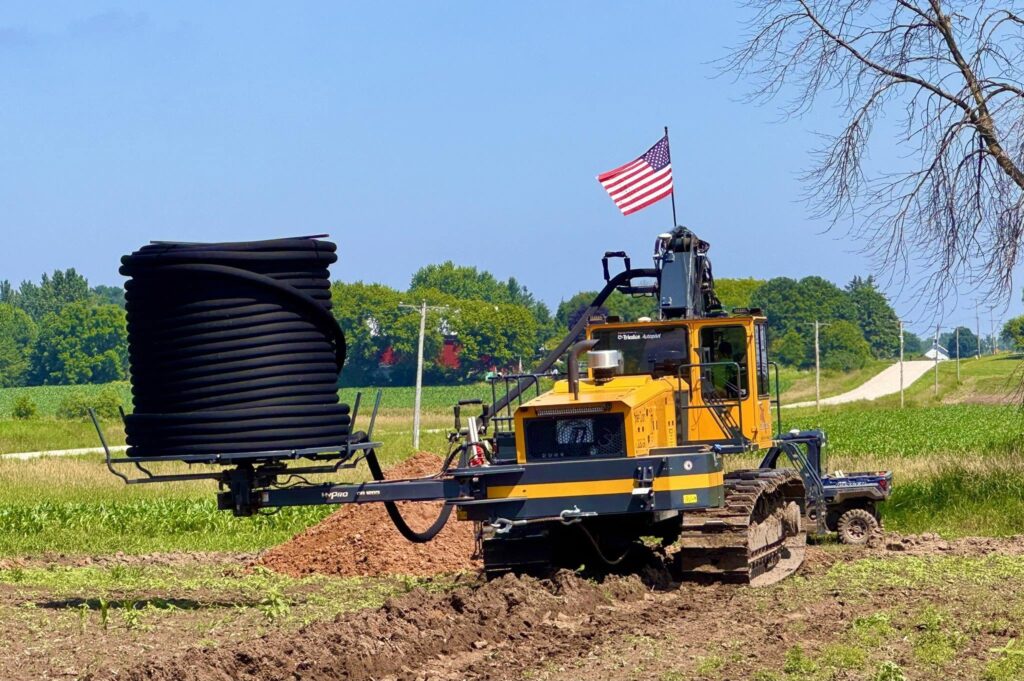
Modern GPS technology has made agricultural drainage installation considerably more precise.
GPS-controlled equipment can help contractors follow the planned elevation, grade, and drainage route across changing terrain. This precision is particularly useful when maintaining the consistent slope required for effective subsurface drainage.
JK Trenching LLC uses a fully GPS-controlled tile plow for agricultural drainage projects and has the capability to plow tile up to 12 inches in diameter. Larger tile sizes can be installed with a GPS-guided excavator. The company also uses GPS Rover surveying to create topographical information and Trimble WM-Drain software for drainage planning.
These tools allow the drainage plan to be developed around actual field elevations rather than guesswork.
Why Wisconsin Farms Need Site-Specific Drainage Design
No two farms have exactly the same drainage conditions.
One field may struggle with a low area that remains wet long after rainfall. Another may have restrictive soil, an existing tile system, sidehill seepage, or limited outlet options.
A professional farm drain tile installation in Wisconsin should therefore begin with an evaluation of the property.
Important considerations can include:
- Soil characteristics
- Existing drainage lines
- Field topography
- Low or saturated areas
- Tile depth and spacing
- Main and lateral sizing
- Available outlets
- Required drainage capacity
JK Trenching LLC specializes in agricultural drainage and provides drain tile installation, drain tile repair, GPS-controlled plowing, GPS site surveying, ditch cleaning, and related drainage services throughout Wisconsin.
Frequently Asked Questions About Farm Drain Tile Depth
What is the typical depth of farm drain tile in Wisconsin?
Modern agricultural drain tile in Wisconsin is generally installed 3 to 6 feet below the soil surface, according to UW agricultural drainage guidance. Actual depth should be determined by field conditions and drainage-system design.
Is deeper drain tile always better?
No. A deeper tile line is not automatically more effective. Soil type, tile spacing, field slope, drainage goals, grade, and outlet elevation all influence the proper installation depth.
How far apart should farm drain tile lines be?
There is no single spacing that works for every Wisconsin farm. Drain tile spacing depends on soil permeability, installation depth, topography, desired drainage performance, and overall system design.
Does farm drain tile need a slope?
Drain tile must have an appropriate grade toward a functioning outlet for gravity drainage to work properly. Accurate surveying and GPS-guided installation can help maintain the designed elevation and slope.
Get Professional Farm Drain Tile Installation in Wisconsin
Proper drain tile depth is only one part of an effective agricultural drainage system. Soil conditions, field elevation, tile spacing, outlet location, and drainage design must work together to provide reliable water management.
JK Trenching LLC Farm Drainage Specialists has served Wisconsin farmland since 1996. The family- and locally owned company is based in the Freedom, WI area and combines decades of agricultural drainage experience with modern GPS-controlled equipment.
If standing water, saturated soil, or recurring wet areas are affecting your fields, contact JK Trenching LLC to discuss a drainage system designed around your property.
JK Trenching LLC
- Phone: 920-766-7431
- Email: keith@jktrenching.com or jeff@jktrenching.com
- Address: 705 Joshua St, Kaukauna, WI 54130
- JK Trenching LLC on Google Maps
Call today to request a free estimate for your Wisconsin farm drainage project.